
Food Systems
Worm composting is nutrient infrastructure in a bin
Vermiculture turns scraps into castings when moisture, temperature, and feeding stay inside range. Technology should guard the biology, not perform for it.
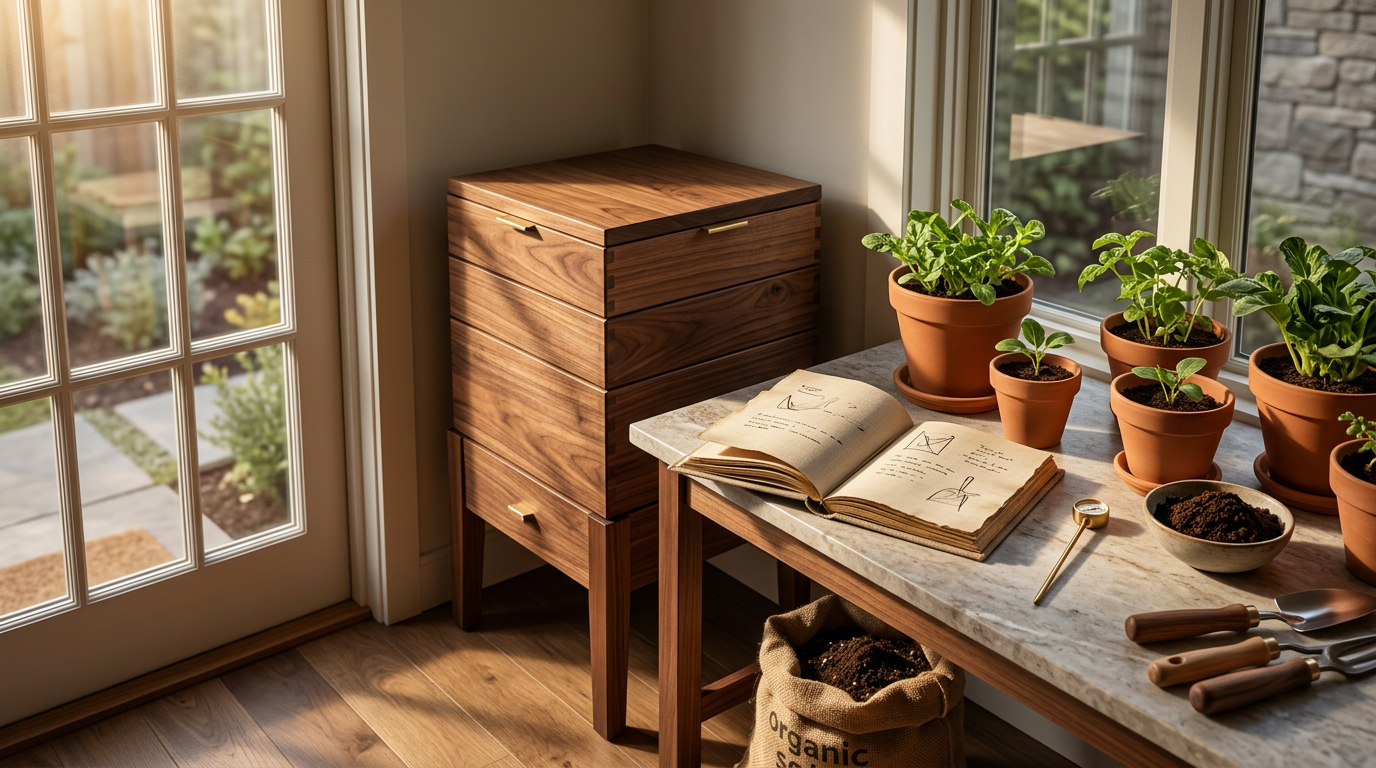
Worm composting looks humble on purpose.
A bin, bedding, scraps, air, water, and red wigglers do not read as capital equipment. On a working homestead they can still be one of the cleanest closed loops: kitchen waste becomes biology, biology becomes castings, castings become fertility, fertility becomes food.
The loop is quiet. That is the point.
Insight: Treat the bin like a small reactor
The default mental model is disposal. Feed, wait, harvest.
A tighter model is a living reactor running inside bounds. Moisture, temperature, airflow, bedding structure, feed rate, and acidity all decide whether the bin hums along or slides toward flight, die-off, or odor.
Technology fits after that reframe.
The win is not complexity. The win is noticing drift before the worms file a formal complaint. In vermiculture, as elsewhere on a techno-homestead, monitoring usually beats automation.
Relevance: Biology punishes neglect and overfeeding
Bins fail in boring, repeatable ways.
Too wet. Too dry. Too hot. Frozen. Fed faster than the herd can process. Starved of air. Acid creep. Fruit flies. Forgotten during the week the garden exploded.
The constraint is continuity. The bin has to survive the same calendar that eats everything else: travel, storms, kidding season, heat, cold, overtime, kids, and the long list of deferred fixes.
Simple sensing helps. Temperature near the mass warns before thermal stress. Moisture checks head off both drought and anaerobic slop. A dated photo or one-line note tracks feed volume and bedding condition. If the bin lives in a greenhouse, garage, or basement, the room around it may matter as much as the bin itself.
Vermiculture also plugs into the larger design: less waste to haul, better garden input, a visible link between plate scrapings and soil. It sits next to chickens, thermophilic compost, mulch, beds, and greenhouse loops as one segment of nutrient routing.
Ownership: Bore the bin on purpose
The best systems are dull in the right way. Bedding holds structure. Air moves. Moisture stays in band. Feed arrives in volumes the population can finish.
Technology should protect that steadiness.
A restrained stack might include:
- One temperature probe in or on the bin wall.
- Moisture checks, finger or sensor, on a schedule you will keep.
- A feeding log that tracks volume and day.
- Shade, insulation, or relocation plan for seasonal edges.
- A low-tech backup if fans, pumps, or radios fail.
Fancier builds can add controllers, fans, trickle moisture, or greenhouse integration. Each addition should pass one test: if it fails, is the bin safer or riskier?
For most households the first upgrade is rhythm, not silicon. Feed less than your optimism. Add carbon-rich bedding. Watch moisture. Keep vent paths open. Harvest before crowding turns management into archaeology. Treat smell as data, not as character.
Notes beat dashboards without intent. "Too wet after melon week" is operational intelligence. A season of those lines teaches more than a metrics panel nobody acts on.
Next Action: Write a one-page worm bin SOP
Build a single sheet the next adult can follow.
Include:
- Location.
- Foods in.
- Foods out.
- Check cadence.
- What too wet and too dry look like.
- Temperature or season triggers for action.
- Backup caretaker.
Add one measurement only if it changes behavior. Temperature is the usual first pick. Moisture follows if you will read it.
The goal is not a smart worm bin. The goal is a nutrient loop that survives real life because the household can see it, tune it, and repair it.
Worms do not need a brand story. They need stable conditions, steady attention, and a site that treats fertility as infrastructure, not as a lifestyle accessory.