
Shelter
Shipping container homes are steel projects in disguise
Containers can be excellent homestead infrastructure when you treat them as engineered shells with normal building problems inside, not as instant housing.
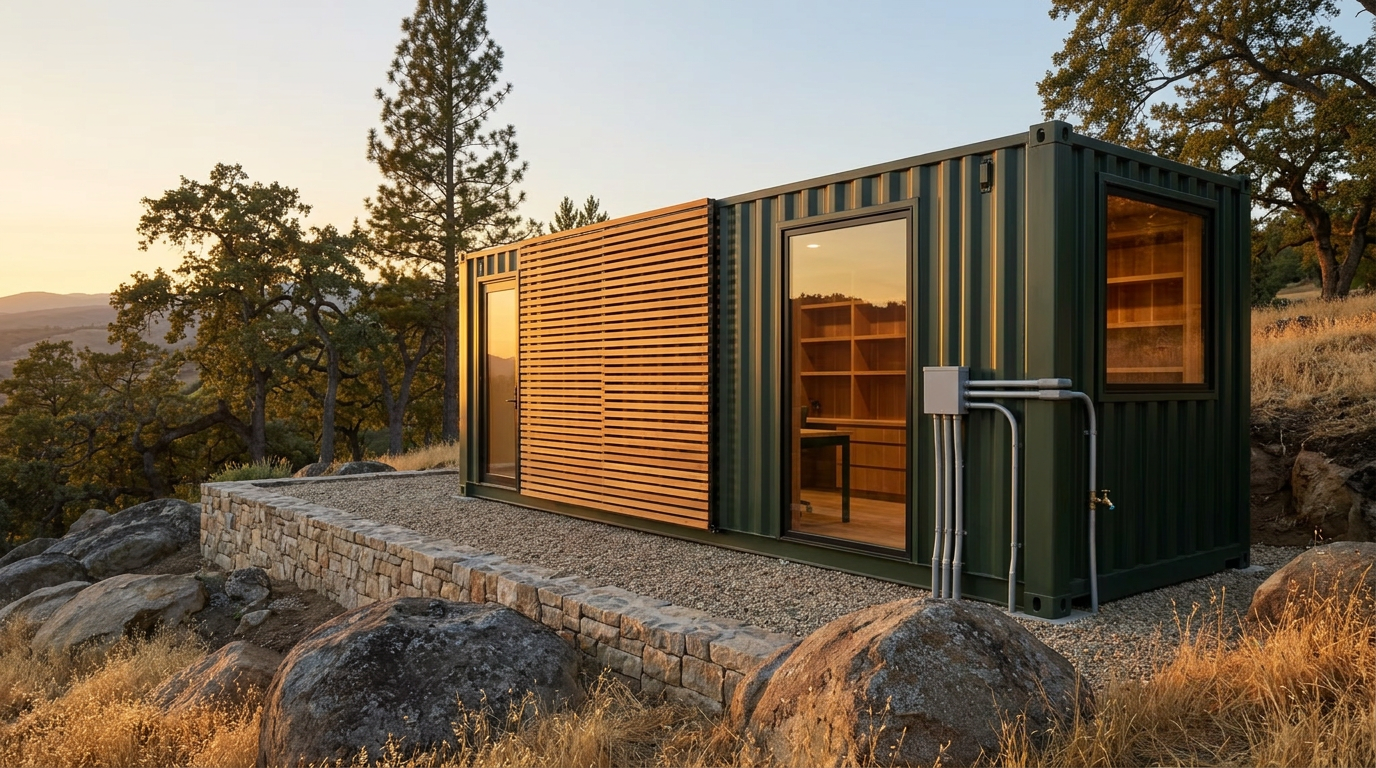
The container pitch is seductive.
The box already exists. It stacks, ships, and reads as industrial chic. Cut openings, insulate, move in. Skip the messy middle of conventional construction.
Some of that is true. Containers make credible shops, storage, utility rooms, studios, equipment shelters, and, in the right jurisdiction, dwellings.
The shell is not the house. It is a starting condition.
Insight: Cutting the box changes the engineering
Strength lives in the frame, corner posts, and corrugated skin. The object was built to move freight, stack under load, and survive rough handling. It was not built to be a code-compliant dwelling with big glass, people breathing inside, and MEP running through the walls.
Openings change behavior. Doors, windows, and wide links between modules need reinforcement. Stack and cantilever schemes add load paths the original designer never signed. The more the object reads as architecture, the less it behaves like an untouched box.
Reframe the job: a container home is a steel building project that begins with a modular chassis and still owes you structure, moisture, insulation, life safety, and approval like any other build.
Relevance: Homestead shelter carries the systems
For techno-homesteaders, shelter is where infrastructure lives.
A container, shed, ADU, or shop might hold batteries, inverters, filters, pumps, radios, freezers, tools, starts, animal supplies, or emergency stock. It can be the utility room the rest of the land depends on.
Questions that actually decide the project:
- Can the structure carry the openings and loads you want?
- Can you insulate without trapping moisture against steel?
- Will zoning, setbacks, fire access, and sight lines accept the scheme?
- Can utilities enter and exit in a maintainable path?
- Will the interior stay tolerable through heat, cold, rain, smoke, and condensation?
- Will insurance and permitting sign the drawings?
The fantasy optimizes for sticker price and speed. The homestead version optimizes for durability, legality, and serviceability.
Condensation is the quiet killer. Steel bridges temperature hard. Warm moist air against cold metal hides damage until it is expensive. Insulation is also vapor strategy. Closed-cell spray foam is common because it can insulate and retard vapor in one pass, but cost, workmanship, and future surgery all carry weight.
Foundations follow the same pattern. Skidding a box onto grade feels fast until moisture, level, access, and code make the footing the real project.
Ownership: Write the job description before you pick the box
Good container work opens with a sentence about purpose.
Storage: weatherproofing, access, venting, security, condensation.
Workshop: power, lighting, dust, heat, cooling, tool flow, egress.
Utility room: service clearance around inverters, batteries, pumps, and filters, plus temperature limits for the gear inside.
Dwelling: full building code path. Structure, insulation, fenestration, plumbing, septic, electrical, ventilation, fire, energy rules, local review. The container may still be the right chassis. It is no longer a cheap impulse buy.
Ownership means refusing the stock photo story.
A useful sequence:
- Define the building job.
- Confirm zoning and permitting before design hardens.
- Decide whether steel module is the right tool for that job.
- Plan openings with reinforcement as a first-class drawing layer.
- Treat moisture, insulation, and ventilation as one system.
- Route utilities for maintenance, not only install day.
- Keep the exterior legible to neighbors, insurers, and the building department.
That sequence turns a meme object into infrastructure that has to earn its footprint.
Next Action: Draw the utility path
Before you price finishes or window walls, draw the utility path.
Power entry. Water entry. Wastewater exit. Ventilation strategy. Battery and tool zones. What must be reachable in the dark or in weather.
If the path is clear, the project can become useful. If it is vague, you still own a box.
The winning builds are rarely the cleverest. They are the ones that stay maintainable while the rest of the property keeps asking for attention.