Energy
Off-grid solar starts with loads, not panels
Design around the work the system must do, the surges it must swallow, and the cloudy week it must survive. Panels are the easy part to photograph.
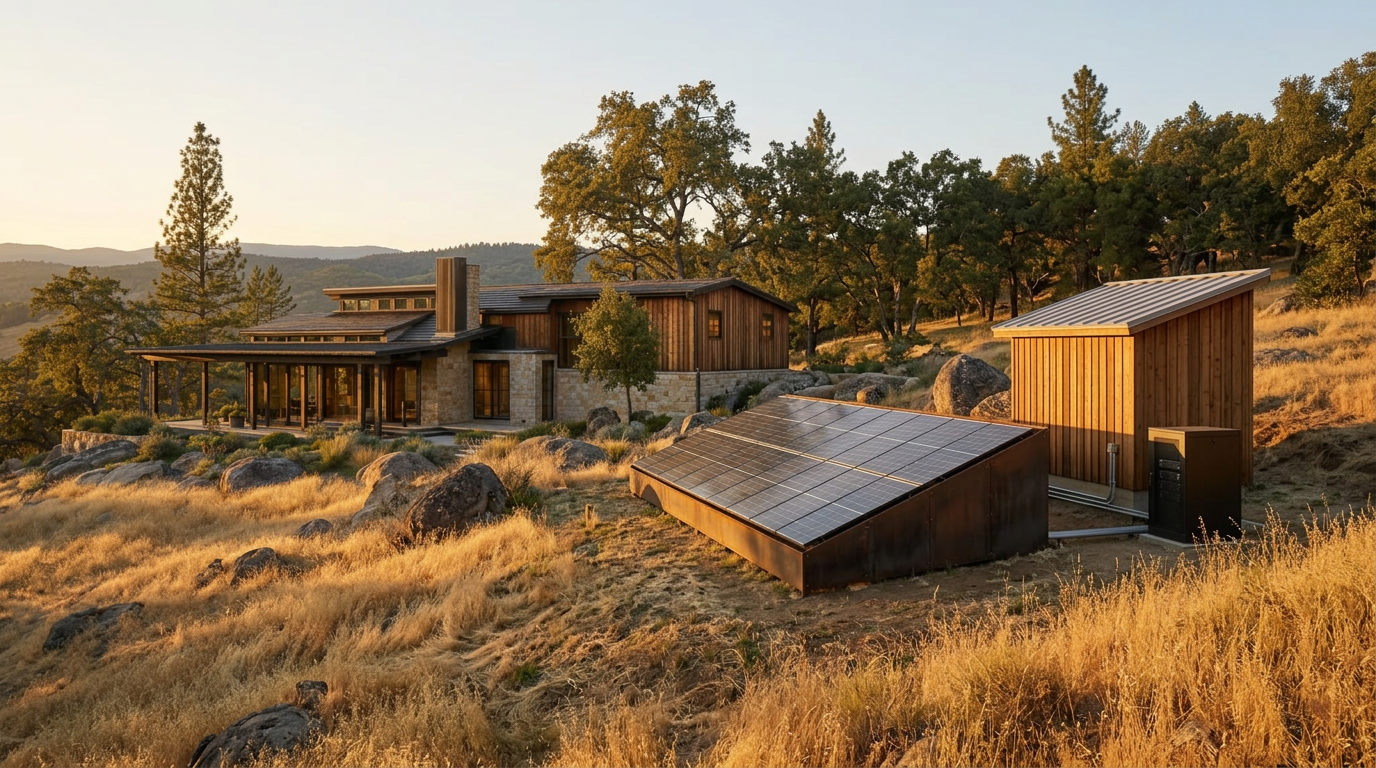
Most off-grid conversations open with panel count. It is an easy number. It is also the wrong first number for almost every homestead.
Panels are visible. The design that matters sits underneath: loads, battery bank, inverter, conductors, backup, and the ugly minute when the well pump, the freezer, and the shop tool all want the same slice of the bank.
Homestead solar is not a kit that makes electricity. It is a contract about which parts of daily life keep running when the grid is absent, expensive, or irrelevant.
Insight: Solar is an operating constraint
The lazy story is generation: add sun until the property is independent.
The accurate story is constraint. Off-grid solar forces an honest load profile.
Lighting and phone charging sit on one end of the spreadsheet. Motor loads sit on the other: well pumps, pressure pumps, shop tools, refrigeration, heat equipment, irrigation. Startup surge often matters more than average draw.
Two sites with the same footprint can need wildly different hardware. One household might back up refrigeration, lights, internet, and laptops. Another might need a deep-well pump, livestock water, Starlink, a pressure system, and enough storage to survive three gray days without tripping low-voltage cutoffs.
Panels matter. The load profile decides the system.
Relevance: A homestead is not a house with panels bolted on
A homestead is a small infrastructure graph. Power ties to water, food, heat, comms, animals, tools, and season.
If the well pump will not start, water security folds. If the bank is undersized, the freezer and the uplink fight the trough heater. If the inverter chokes on surge, the paper design fails at the worst moment. If the only status UI needs the internet, it vanishes when you need it most.
Grid-lite thinking beats pure severance. The goal is fewer single points of failure while keeping the capabilities that make the place workable.
Many technical homesteaders sort loads into tiers:
- Critical: water, refrigeration, communications, essential lighting, controls, safety.
- Useful: laundry, tools, irrigation, greenhouse gear, food processing.
- Deferrable: discretionary heat, opportunistic charging, shop work, anything that can wait for sun.
Once loads sit in those buckets, solar stops being a vendor bundle and becomes a set of explicit trade-offs.
Ownership: Design from the failure case backward
Start with the moment you refuse to live through.
Two cloudy winter days and a cold bank. A pump trying to start at low state of charge. Smoke cutting production. A family member alone with a system only one person understands.
Walk backward from that scene.
First, list what must run. Note watts, inrush, runtime, and whether the task can move into the solar window. Large motors deserve line items because inrush shapes inverter and battery choices more than steady draw.
Second, split production from storage. More array helps sunny days. It does not replace night draw, storm strings, or winter deficits. Batteries are the buffer that lets the site choose when to spend its own electrons.
Third, plan load shifting. Pump to storage, run tools, charge packs, irrigate, process food while the array is carrying. That is not compromise. It is cooperation with the physics you bought.
Fourth, keep manual fallback obvious. Label critical circuits. Mark shutoffs. Write an operating note another adult can follow.
The strongest systems read clearly under stress, not only on the spreadsheet that sold them.
Next Action: Make a one-page load map
Before you price panels, batteries, or inverters, build a one-page load map.
Four columns:
- Load name.
- Must run, useful, or deferrable.
- Typical runtime.
- Startup or surge notes.
Circle anything tied to water, cold storage, comms, heat, or animals. Those circles define the system.
The next step is not a shopping cart. It is a clear list of what must never drop, what can wait for sun, and what still works when the electrons stop.
Off-grid solar is one layer in a household operating system, not independence by slogan alone.